
Prank House Escape
Dinosaur HouseSimulation
4.062.00 Reviews
- Version
- 1.0.59
- Installs
- 10.00M
- Age Rating
- Everyone
Screenshots
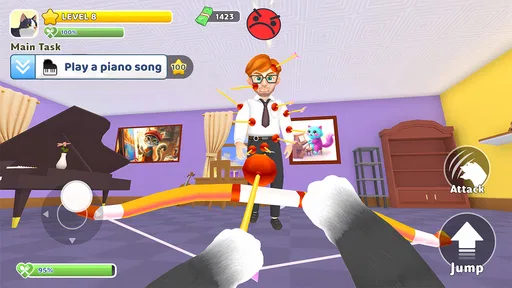
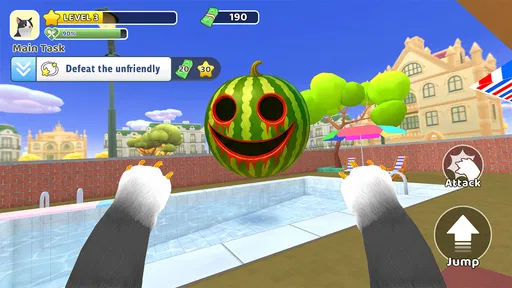
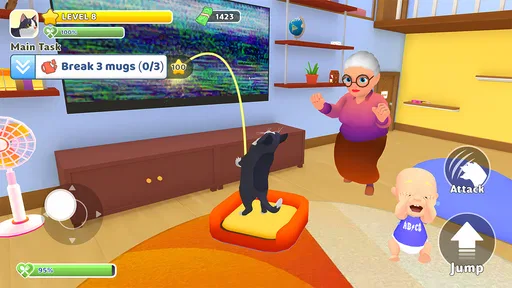
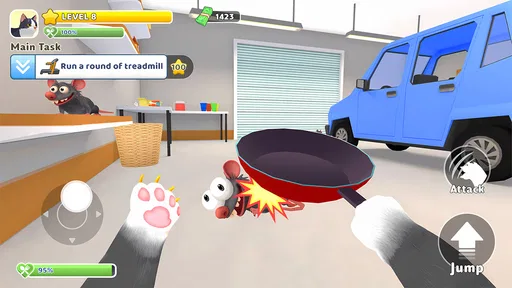
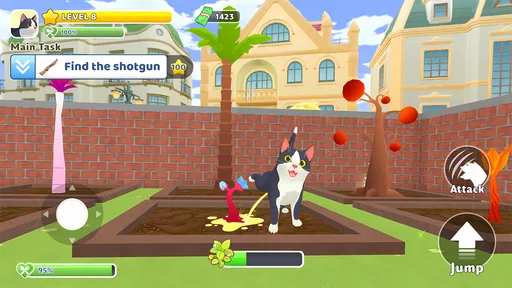
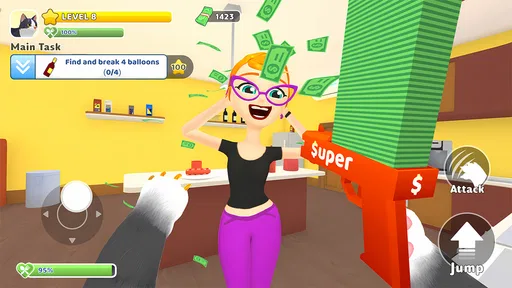
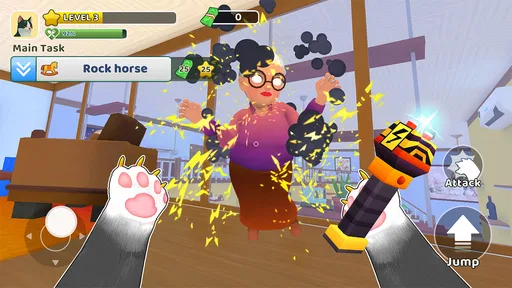
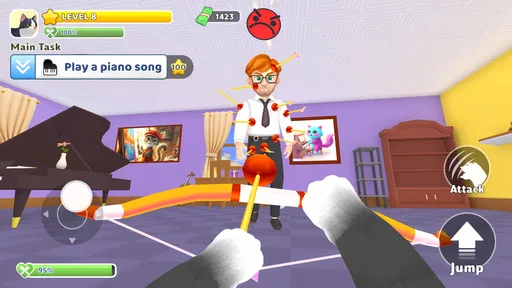
Our Review of Prank House Escape
 Analysis by Appyee
I went into Prank House Escape expecting a quick, silly simulation, and that is exactly where it makes its best first impression. The basic appeal is easy to understand: create trouble inside a house, enjoy the reaction, and try to avoid being caught. It is a light game from Dinosaur House, aimed at Everyone, and its free entry point makes it simple to test without committing to a purchase.
What surprised me is that the fun is less about causing the biggest possible mess and more about learning how boldly I can act before the situation turns against me. That small shift gives the game a useful rhythm. I am not simply tapping through a sequence of jokes; I am watching the space, choosing when to take a risk, and deciding whether the next prank is worth the possible consequence.
After spending time with it, I see a game that works best in short sessions. It is not trying to replace a deep management simulator or a long adventure. Instead, it offers a compact playground for players who enjoy mischievous objectives, simple experimentation, and the satisfaction of getting away with something that looked slightly too risky.
How the first goals pull you into the house
The opening appeal comes from the clarity of the premise. I do not need a lengthy explanation to understand what I should be doing: look for an opportunity, cause chaos, and stay out of trouble. That direct setup is important because this kind of game depends on immediate interaction. If the early moments were buried under complicated instructions, the joke would lose its energy.
My first useful approach was to treat each room as a small puzzle rather than rushing toward the most obvious action. The house is not just a backdrop for random mischief. It becomes a place where I scan for what can be disturbed, where attention might be drawn, and which move can be made without immediately exposing me. Even when the objective feels simple, this way of looking at the environment gives the first attempts a little more purpose.
The early goals are also effective because they establish the game’s central trade-off. A safe action may be less exciting, while a more ambitious prank may offer a better feeling of progress but create more danger. I found myself naturally testing that boundary. On one attempt I would play cautiously to understand the situation; on another, I would deliberately push farther to see how much disorder I could create before the escape part became urgent.
That makes the game approachable for younger players and casual users, but it does not make the opening completely empty for adults. I enjoyed it most when I stopped treating the objectives as a checklist and started treating them as invitations to experiment. The difference is subtle, but it gives the simple premise a reason to hold my attention beyond the first laugh.
Reading progress without a heavy interface
One of the better choices here is that progress feels connected to what I am doing rather than to a large collection of abstract systems. I can tell that I am moving forward when I become more confident in the house, recognize the safer moments, and complete a prank without panicking. That kind of progress is easy to understand even if someone has never played a simulation game before.
I also like that the game’s theme keeps the goals readable. In a conventional simulation, progress might mean collecting resources, improving equipment, or managing a schedule. Here, the meaningful question is more immediate: did I create enough trouble, and did I manage to get away? The result is less demanding, but it is also less intimidating. I can start playing for a few minutes without needing to study a complicated economy or memorize a long list of upgrades.
There is a trade-off, though. Players who need visible long-term milestones may find this style of progression lighter than expected. The satisfaction comes from improving my decisions and handling situations more cleanly, not from building an elaborate empire. If you want a simulation with detailed statistics, extensive customization, or a large strategic layer, this is probably not the right choice.
For me, the strongest progress signal is the change in my own behavior. At first, I was tempted to act immediately. Later, I paid more attention to timing and escape options before committing. That is a modest form of mastery, but it fits the game’s playful scale. The experience rewards observation and restraint as much as enthusiasm.
Why the challenge works better when I slow down
The challenge is built around exposure rather than complexity. I am not solving dense logic problems; I am managing the risk of being noticed while trying to complete the prank. That creates a clean difficulty curve for casual play. The first attempts let me understand the tone and basic rhythm, while later situations feel more demanding because I have to combine mischief with caution.
I found that rushing was usually my own biggest mistake. When I focused only on the prank, I ignored the escape part of the game. A better routine was to look around first, identify a likely route away from trouble, and only then make the move. This is one of the most useful practical tips I can offer: plan the exit before starting the prank. It sounds obvious, but it changes the experience from frantic tapping into a small tactical decision.
Another helpful habit is to separate experimentation from serious attempts. When I was learning how the house responded, I accepted that I might get caught and used that attempt to understand the space. Once I had a better idea of the timing, I tried again with a clearer plan. This makes failure feel less wasteful and helps the difficulty seem fairer, even when a mistake is frustrating.
The game is at its best when the challenge comes from my choices rather than from unclear rules. If I lose because I took an unnecessary risk, I can usually see the lesson. If a player prefers completely predictable outcomes or dislikes repeating an action after a failed attempt, the same structure may feel irritating. The game asks for a little patience, despite its comic presentation.
What keeps a short session interesting
The main retention pressure comes from the desire to try again with a better plan. I often finished an attempt thinking that I had been one decision away from success. That feeling is useful because it encourages another round without requiring a long play session. I could close the game after a few minutes, or continue because I wanted to prove that I could handle the same kind of situation more cleanly.
That loop is especially suitable for everyday interruptions. Imagine waiting for a bus, taking a short break between tasks, or sitting down after dinner with only a small amount of free time. I can open the game, attempt a prank, learn from the result, and stop without losing the thread of a huge story. It gives casual players a clear beginning and end to each session.
At the same time, I would not describe the retention as endlessly deep. The concept is focused, and that focus is both its strength and its limit. Once the surprise of the house and the prank premise wears off, continued interest depends on whether you enjoy refining your approach. Players who want constant new mechanics may eventually prefer a broader simulation or a stealth game with more elaborate objectives.
My advice is to approach it as a compact challenge game rather than a permanent daily routine. It is more enjoyable when I play because I want to improve a specific attempt, not because I expect a huge stream of content. That expectation makes the pacing feel honest and prevents the lighter progression from becoming a disappointment.
Where the pacing feels strong and where it may drag
The pacing works when the game lets me move quickly from intention to action. The prank idea is immediate, and the escape consequence gives each decision a little urgency. I never needed a complicated preparation phase to enjoy the central loop. That makes the game accessible, particularly for people who find traditional simulation titles too slow or too technical.
The weaker side of this pacing is that repetition can become noticeable if I approach every attempt in exactly the same way. The game benefits from curiosity. I need to vary my timing, reconsider the safest route, and accept that a less obvious action may produce a better result. If I simply repeat the same move without learning from it, the experience becomes flatter.
That is why I would not recommend playing for long uninterrupted stretches unless you are actively chasing cleaner successes. The game’s humor and tension are more effective in bursts. A short pause can also help because returning later makes the house feel like a fresh little problem instead of a routine task.
Compared with a standard life simulation, this is much more focused and mischievous. Compared with a conventional stealth game, it is lighter and less serious, with the emphasis placed on playful disruption rather than a dramatic story. Compared with puzzle games, it relies less on one correct answer and more on choosing a risk level that suits the moment. Those differences make it easy to place: it is for players who want a casual simulation with stealth-like tension, not a full-scale simulation or a demanding stealth campaign.
Who should play it, and who should skip it
I would recommend it to players who enjoy playful objectives, short attempts, and the satisfaction of getting away with a risky action. It is also a reasonable choice for families because the content rating is Everyone and the premise is presented as harmless mischief rather than serious conflict. The free price makes it especially easy to sample before deciding whether the loop fits your taste.
It is a good match for someone who likes experimenting without needing a huge rulebook. You can begin with the obvious goal, then gradually improve by observing the house and thinking ahead. I also think it suits players who enjoy failure as feedback. A failed escape is more useful when it teaches you to prepare better, not when it is treated as a reason to quit immediately.
I would skip it if you are looking for a deep construction simulator, a detailed household-management game, or a story-driven adventure. It also may not suit players who dislike being caught, repeating attempts, or making decisions under mild pressure. The game’s charm comes from that risk, so removing the possibility of failure would remove much of what makes the loop work.
Parents choosing it for a younger player should still consider the individual child’s response to prank-based play. The Everyone rating makes the intended audience broad, but some children may enjoy the silly chaos while others may prefer calmer creative games. In my view, the game is best presented as a playful challenge about timing and consequences, rather than as encouragement to imitate every prank in real life.
Practical ways to get more from each attempt
The first tip is to observe before acting. I know the premise encourages immediate mischief, but a few seconds of attention can reveal more than a rushed attempt. Look at the surrounding space, consider where trouble might come from, and decide whether the reward of a bolder action is worth the exposure. This turns the opening of each attempt into a planning phase without making the game feel slow.
The second tip is to use failed attempts as reconnaissance. Instead of judging a loss only by whether the prank succeeded, remember what it taught you about timing and movement. I found that this mindset reduced frustration and made the next attempt more deliberate. The game becomes more enjoyable when every mistake narrows the range of bad choices.
The third tip is to avoid confusing maximum chaos with maximum progress. The loudest or most ambitious action is not automatically the smartest one. Sometimes a controlled prank followed by a clean escape feels more satisfying than creating a larger disturbance and losing control. That distinction is central to the game’s best moments.
Finally, I recommend playing in short blocks and stopping after a genuinely good attempt. Ending on a successful escape preserves the feeling that I improved, while continuing through tired, careless attempts can make the game seem more repetitive than it really is. This is a small but effective way to match the game’s pacing to its strengths.
Device fit, access, and what to expect from the current build
The game is free, which removes the biggest barrier to trying it. It is listed for Android devices running at least version 7.1, so it remains accessible to users who are not carrying a very recent phone or tablet. I would still keep expectations realistic: compatibility does not mean every older device will feel equally comfortable, especially in a game where quick reactions and clear visual reading matter.
Dinosaur House released it on April 29, 2025, and the current version is 1.0.59. Those details matter mainly because they identify the build a new player is likely to encounter. The project is still relatively focused in its identity, so I would judge it by the quality of its prank-and-escape loop rather than expect the breadth of a long-established simulation series.
Its audience is already substantial, with over ten million installs and an average rating of 4.0 from around nine thousand ratings. I see that as a sign that the concept has broad appeal, but not as a guarantee that everyone will enjoy the same pacing. The game is easy to understand, yet its replay value depends strongly on whether you like repeating a situation to improve your timing.
My verdict on the progression and lasting appeal
Prank House Escape succeeds because its goals are immediately readable, its challenge grows from risk management, and its sessions are short enough to fit into ordinary spare time. I liked the way progress came from becoming more observant and less impulsive. The game does not need a complicated upgrade structure to create that feeling; the house itself becomes the test, and my decisions determine whether the attempt feels clever or careless.
The progression is not deep in the traditional simulation sense. There is no reason to choose it over a larger alternative if your priority is extensive management, complex customization, or a substantial long-term campaign. Its retention is based on replaying with better judgment, and that can lose force for players who need constant novelty.
For the right audience, though, that simplicity is a benefit. I can recommend it to anyone who wants a free, lighthearted simulation built around pranks, observation, and escape. My strongest recommendation is to play patiently: scan the room, think about the way out, and treat each failed attempt as information. The best moments come from controlled chaos, not careless clicking.
Overall, Dinosaur House has created a focused game that knows what it wants to be. Prank House Escape is not a replacement for a deep simulator, but it is an enjoyable compact alternative when I want a mischievous challenge that starts quickly and rewards a little planning. If that balance sounds appealing, it is worth trying; if you need a large progression system, I would look elsewhere.
Verdict
Strengths of Prank House Escape
- Simple controls make it easy to pick up and play.
- Short escape challenges suit quick gaming sessions.
- Prank-themed puzzles offer a lighthearted atmosphere.
- Exploration encourages players to inspect every room carefully.
- Offline play is convenient when no internet connection is available.
Limitations of Prank House Escape
- Some puzzles may feel unclear without trial and error.
- The prank humor may not appeal to every player.
- Limited variety can make repeated play less engaging.
- Ads may interrupt gameplay or appear between escape attempts.
- Graphics and animations may feel basic on newer devices.
Other Releases by Dinosaur House
View All
Sprunki Monster Music Beats
Music4.7
Similar Picks in This Category
View All
Truckers of Europe 3
Wanda Software4.3

Town Building Life Simulator
XGame Global4.2

Fidget Toys Trading・Pop It 3D
Freeplay Inc4.7

Sculpt People
CrazyLabs LTD4.4

Scary Teacher 3D
Z & K Games4.2

Hair Tattoo: Barber Shop Game
CASUAL AZUR GAMES4.3
Frequently Asked Questions
What is Prank House Escape?
Prank House Escape is a casual puzzle and escape-style game built around exploring a house, interacting with objects, solving small challenges, and trying to get out while dealing with humorous prank situations. The experience is aimed at players who enjoy lighthearted adventure gameplay rather than serious horror. Progress usually depends on observing the environment carefully, testing different interactions, and finding the right sequence of actions to unlock the escape.
How do you play Prank House Escape?
Gameplay generally involves moving through rooms, examining furniture and other objects, collecting useful items, and solving environmental puzzles. Some objects may trigger jokes, traps, or unexpected reactions, so it is worth experimenting rather than rushing through each area. If you become stuck, retrace your steps and look for details that may have been overlooked, such as hidden items, switches, clues, or interactive objects that only become useful after another action.
Is Prank House Escape suitable for children?
Prank House Escape is designed as a playful and humorous escape game, but suitability can depend on the child’s age and sensitivity. The game may include surprise moments, mischievous pranks, cartoon-style tension, or characters behaving in exaggerated ways. Parents should review the store listing, screenshots, age rating, and any available content information before allowing younger children to play, especially if they dislike sudden sounds or unexpected visual effects.
Is Prank House Escape free to download and play?
The availability and cost of Prank House Escape can vary depending on the platform, region, and version published in the app store. Some editions may be free to install while offering advertisements, optional purchases, or additional content. Before downloading, check the official Google Play or App Store listing for the current price, in-app purchase details, required permissions, and whether an internet connection is needed for ads or specific features.
Does Prank House Escape require an internet connection?
The main escape and puzzle experience may be playable offline after the game has been installed, but this can depend on the version and how advertising or other online services are implemented. An internet connection may still be required for the initial download, updates, advertisements, purchases, analytics, or restoring progress. If you plan to play while traveling, launch the game once online and test which features remain available without connectivity.
Play our best games!


